
Phra Phirap Yod Kaew Borom Khru
Phra Phirap Yod Kaew Borom Khru
The Supreme Master in Regal Attire, the Mighty Vanquisher
Phra Phirap, the divine asura also known as Bhairava, is a manifestation of Shiva who vanquishes evil. Revered as the supreme master of the yakshas, he possesses formidable powers to subdue spirits, demons, curses, and malevolent forces.
According to legend, a devastating epidemic once claimed countless lives. With nowhere else to turn, the people invoked and worshipped Bhairava. The epidemic subsided, and peace and well-being returned to the land. This story gave rise to the traditional belief that devotion to him offers protection from danger and harmful supernatural influences, while blessing devotees with good health and freedom from epidemics.
Phra Phirap is also revered as Nataraja, the Lord of Dance, who originated Vichitra Tandava, one of the 108 intricate dance movements. He therefore holds a place among the most important divine masters of Thai classical dance and music, particularly in khon masked dance, traditional theatre, and wai khru ceremonies honouring teachers. He is also revered and held in awe among performing artists along the Ganges, in Orissa, and around other sacred rivers of India. In Nepal, he is regarded as a deity of war who can also dispel illness, bestow life, and bring life to an end. Devotees traditionally believe that worshipping Bhairava protects them from the malevolent powers of spirits and demons.
In Thai tradition, Phra Phirap is honoured as a manifestation of Shiva and the supreme master of the performing arts. He is believed to bestow good fortune, happiness, prosperity, peace, authority, personal charm, and the goodwill of others—blessings particularly valued by performing artists.
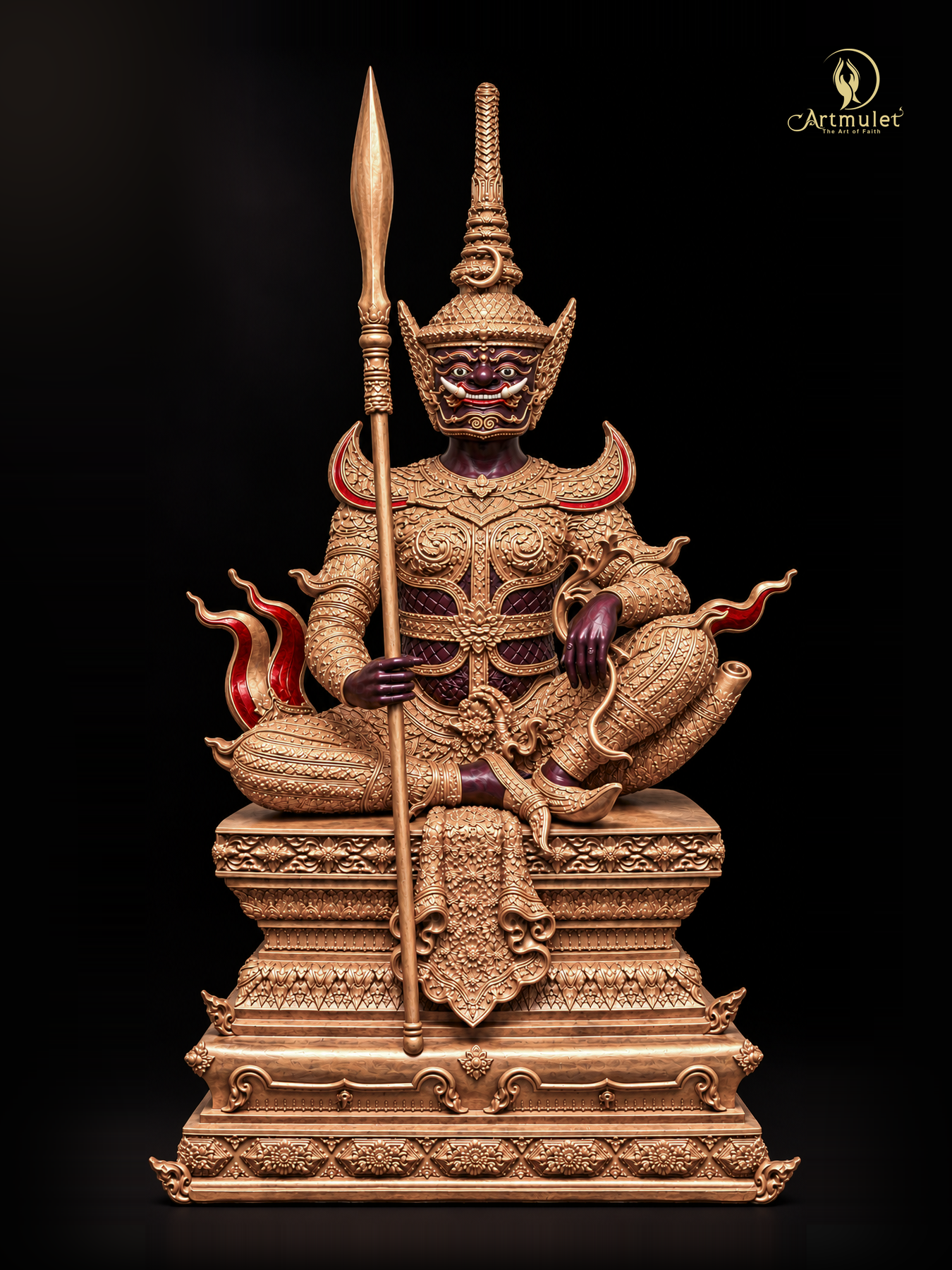
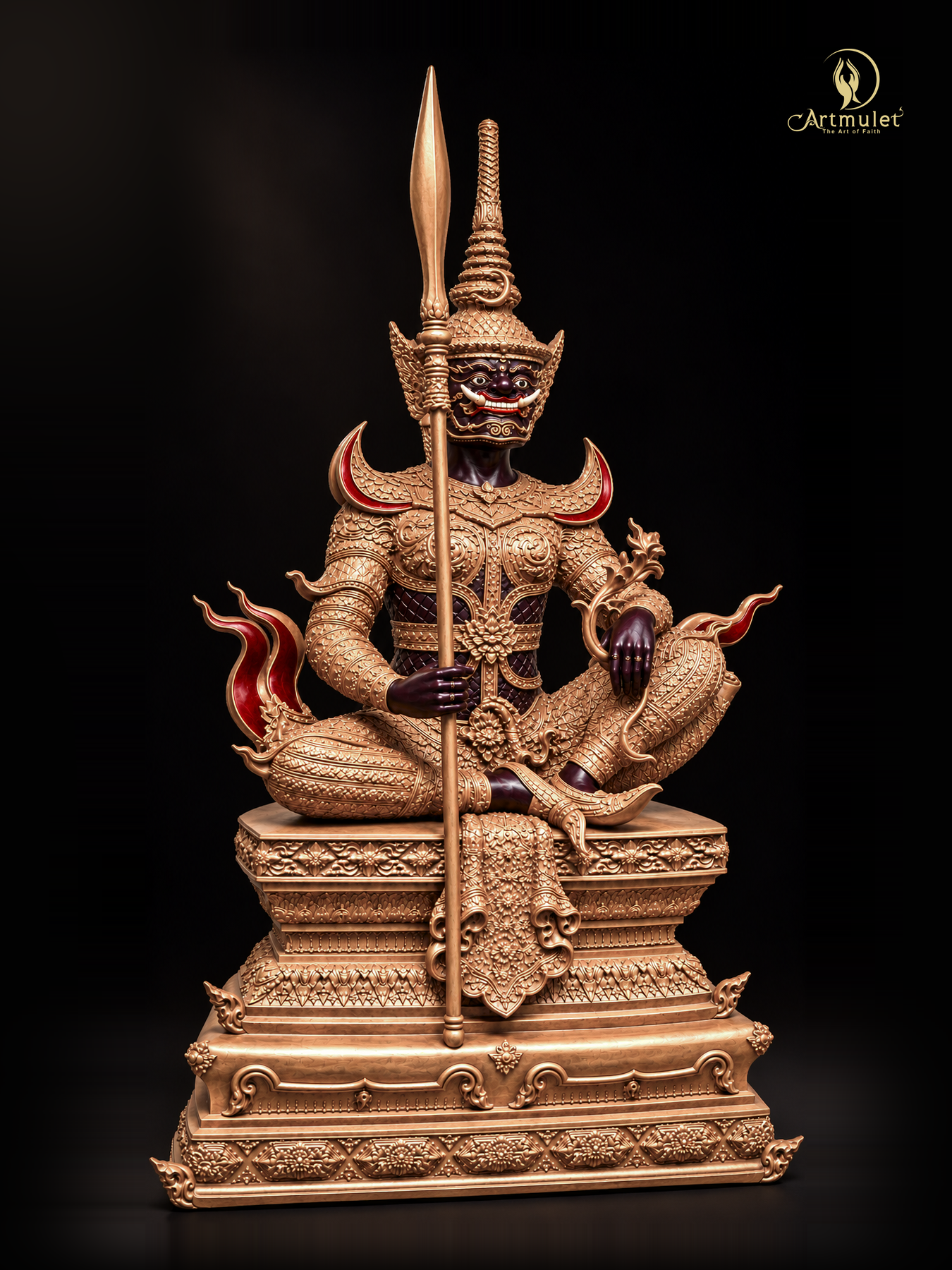
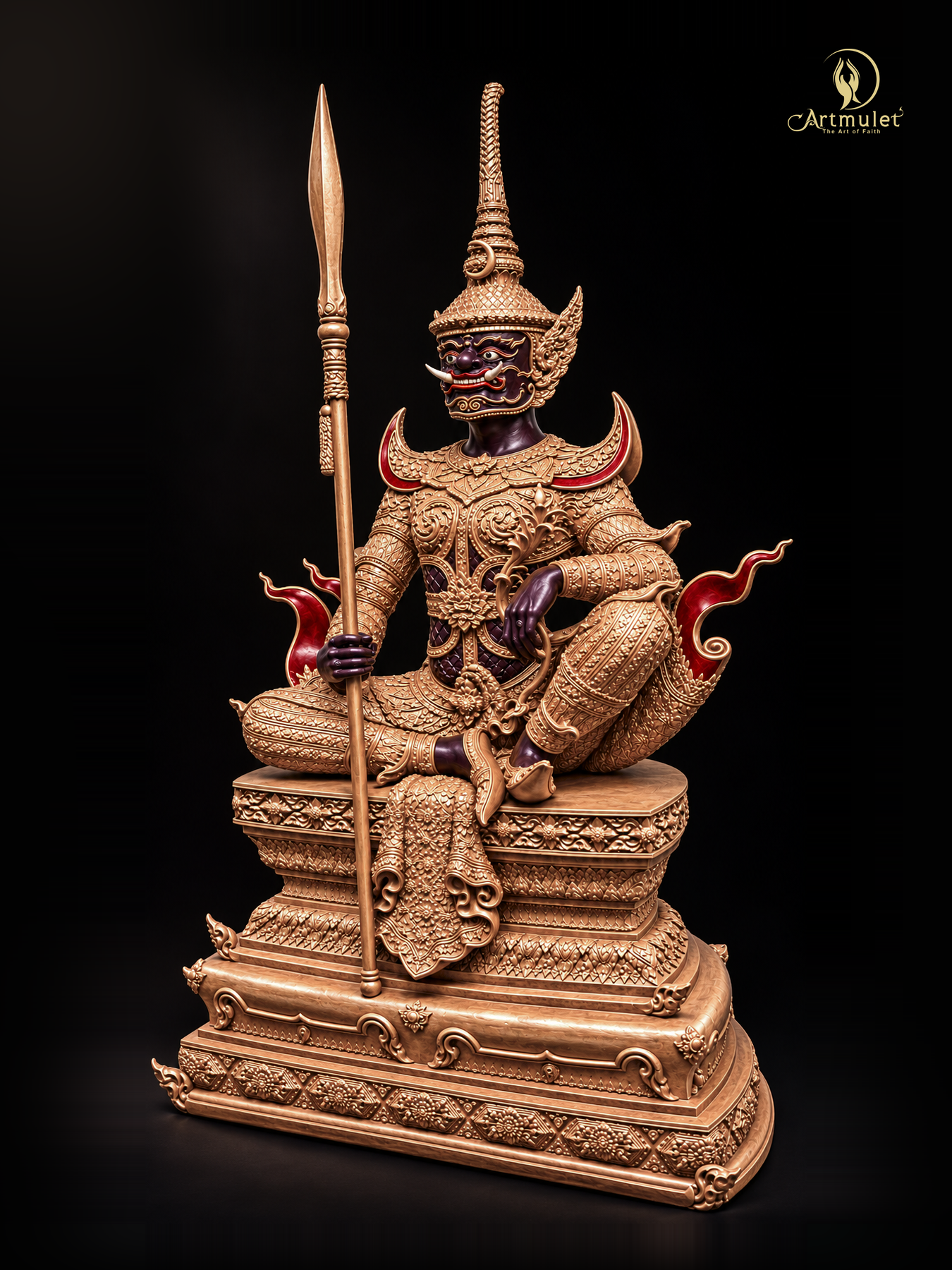
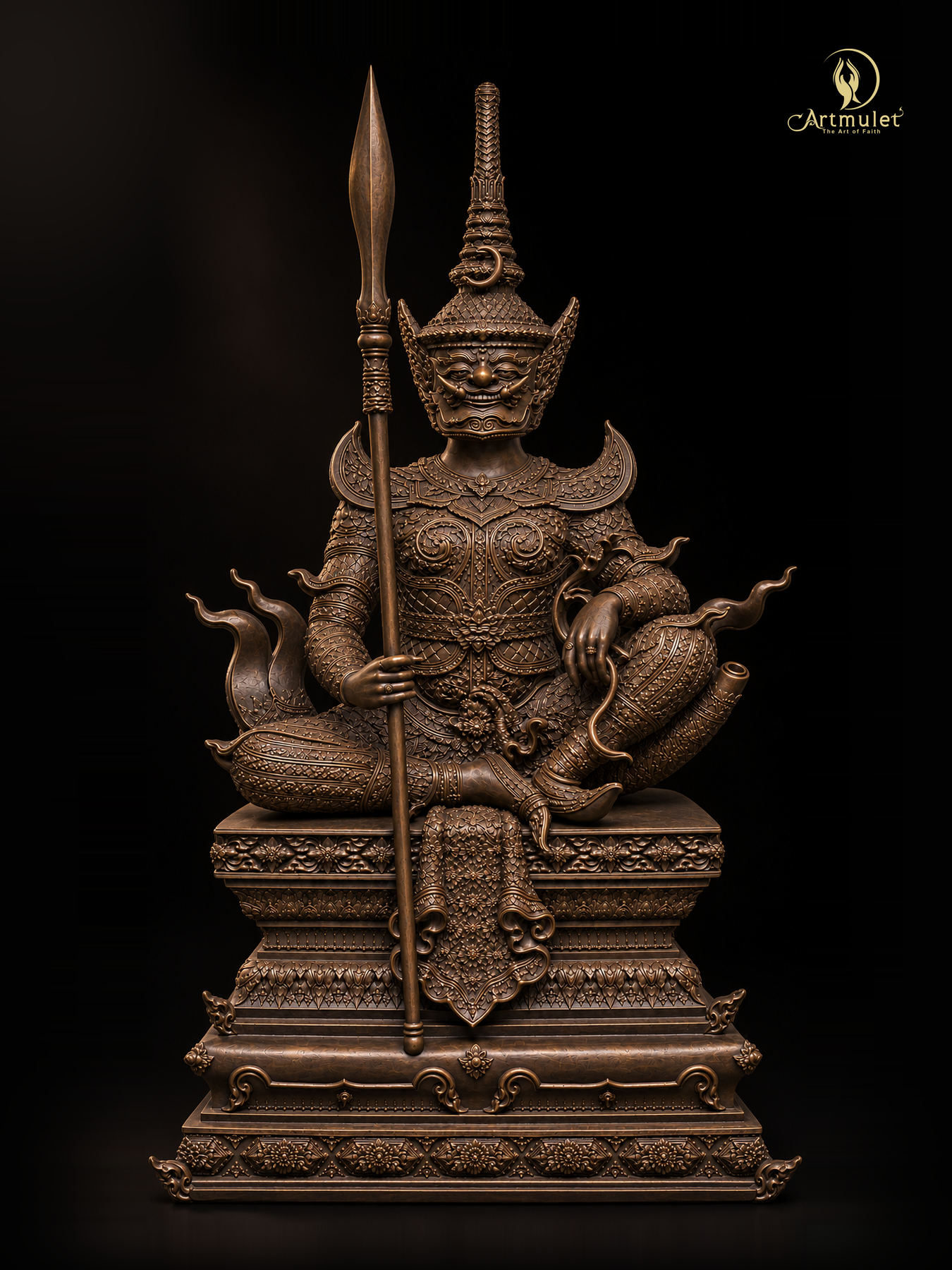
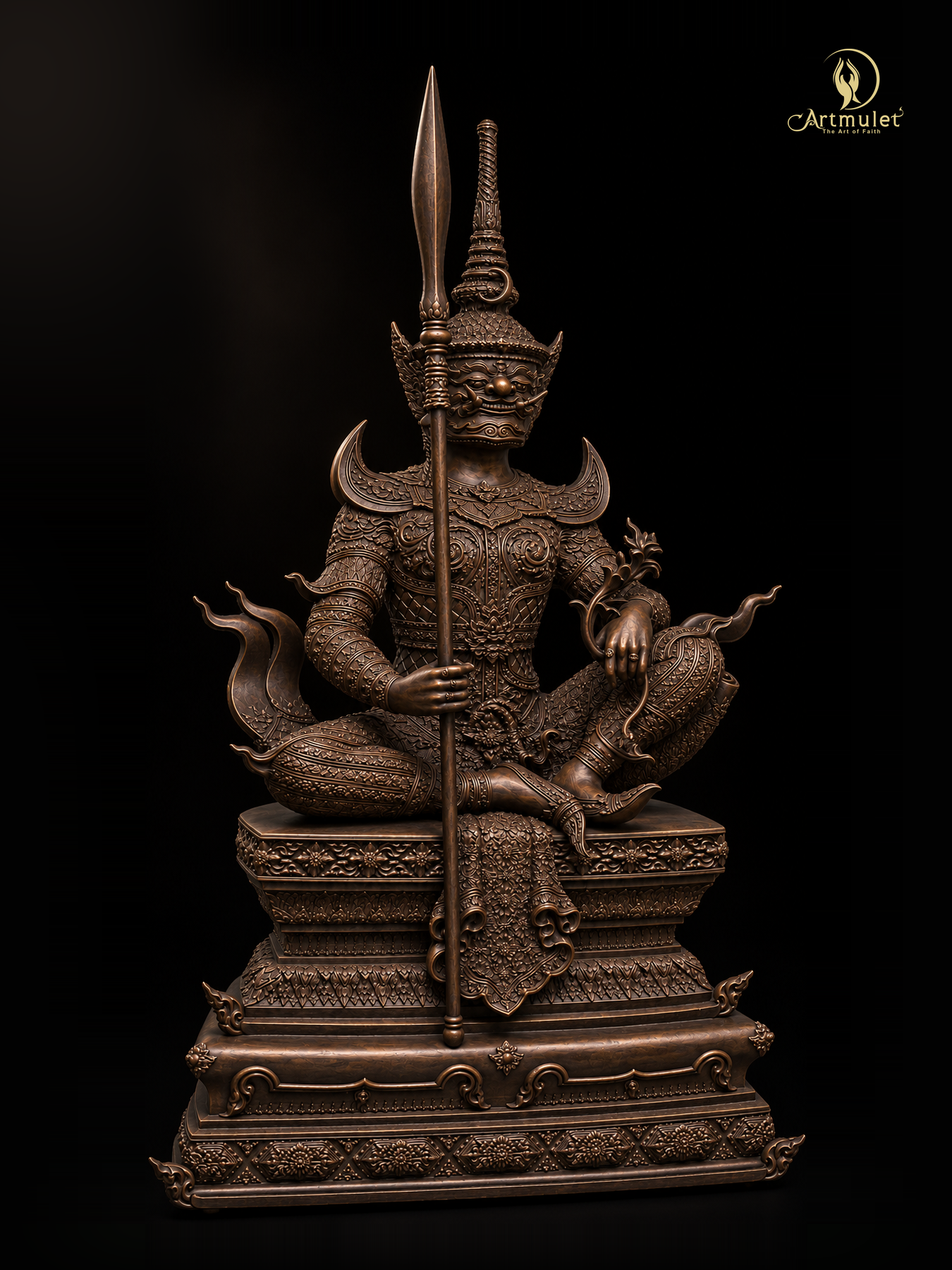
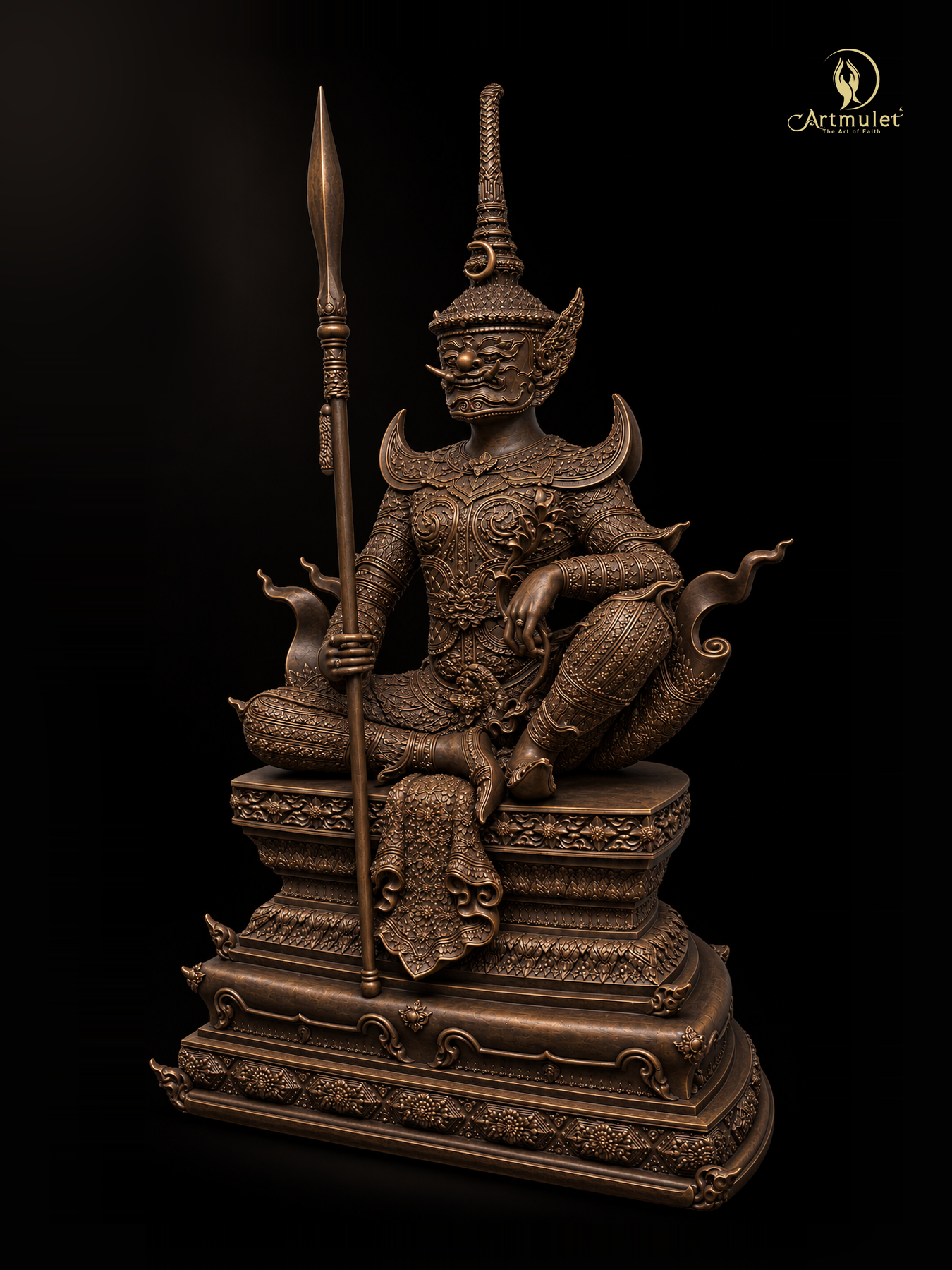
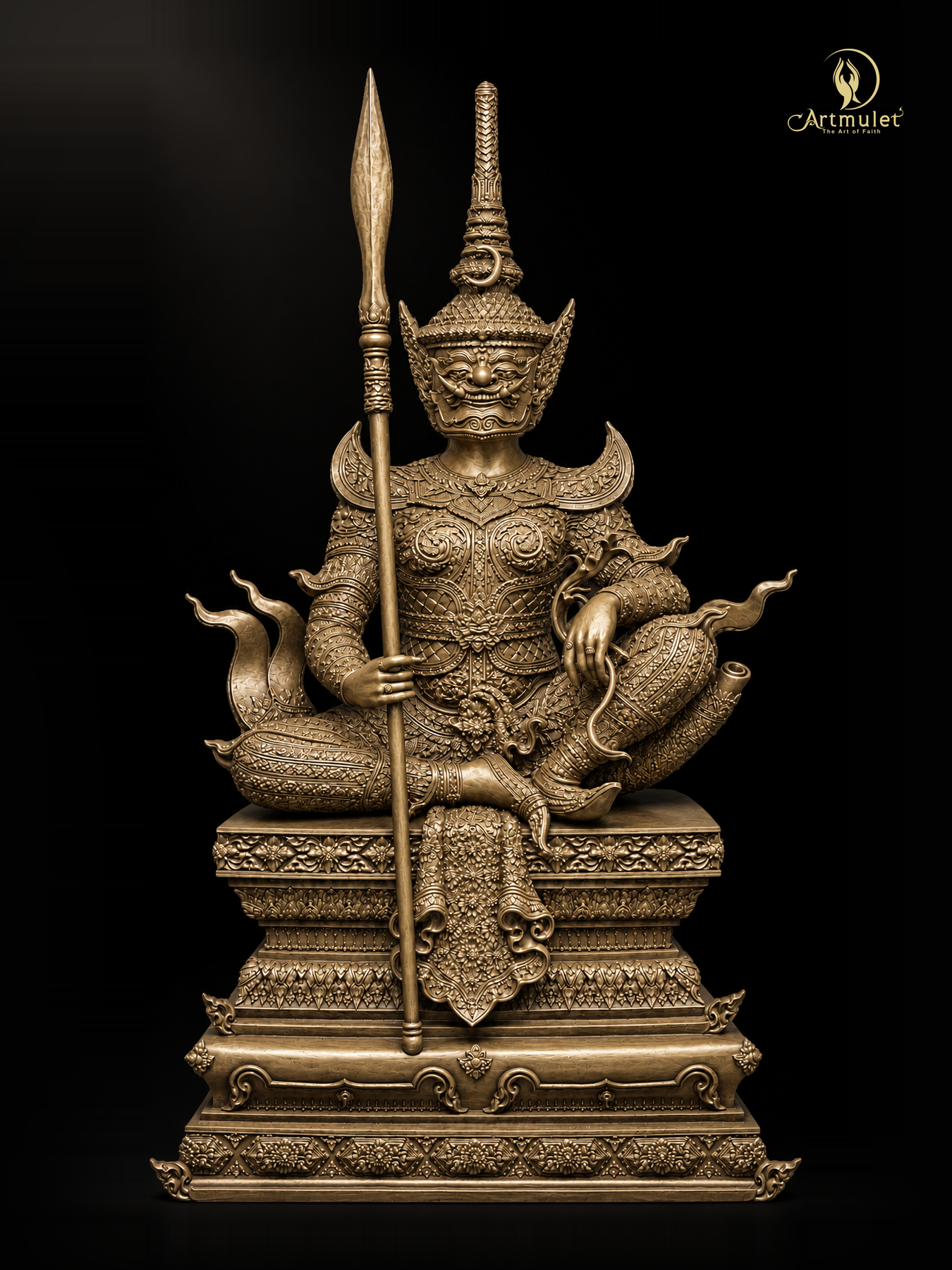
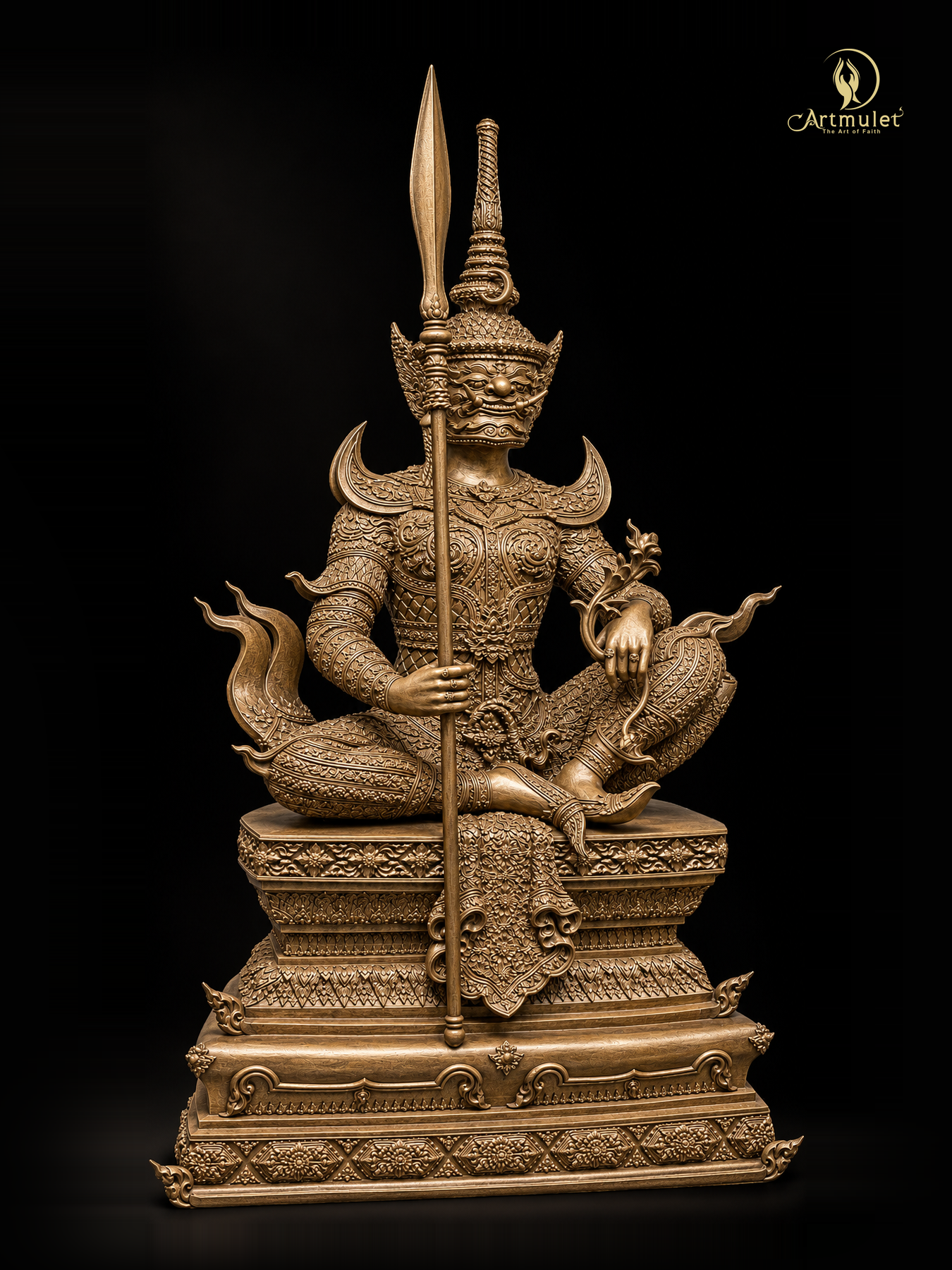
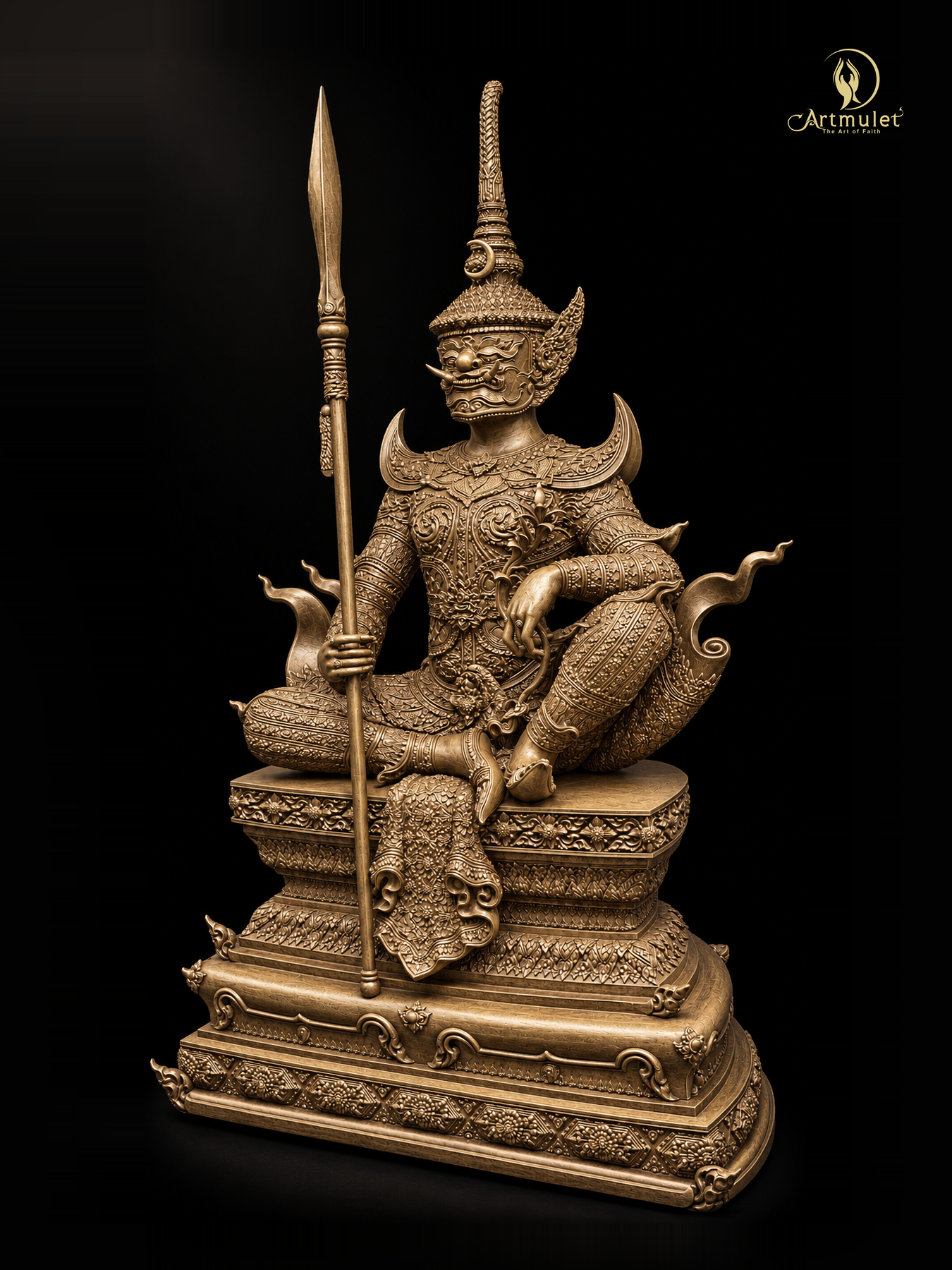
His traditional appearance is that of a fierce divine asura, with a bald head, red hair, a stern expression, crocodile-like eyes, short fangs, and deep purple skin. His eyebrows and chin are often painted green and red, while clockwise circular markings adorn his body, signifying his origin in Shiva. In his fully adorned form, he wears the traditional yot doen hon crown. One hand holds a spear to drive away spirits and inauspicious influences; the other holds a star gooseberry branch for sprinkling sacred water upon devotees. His fierce appearance thus also symbolises guardianship, protection, and the removal of misfortune.
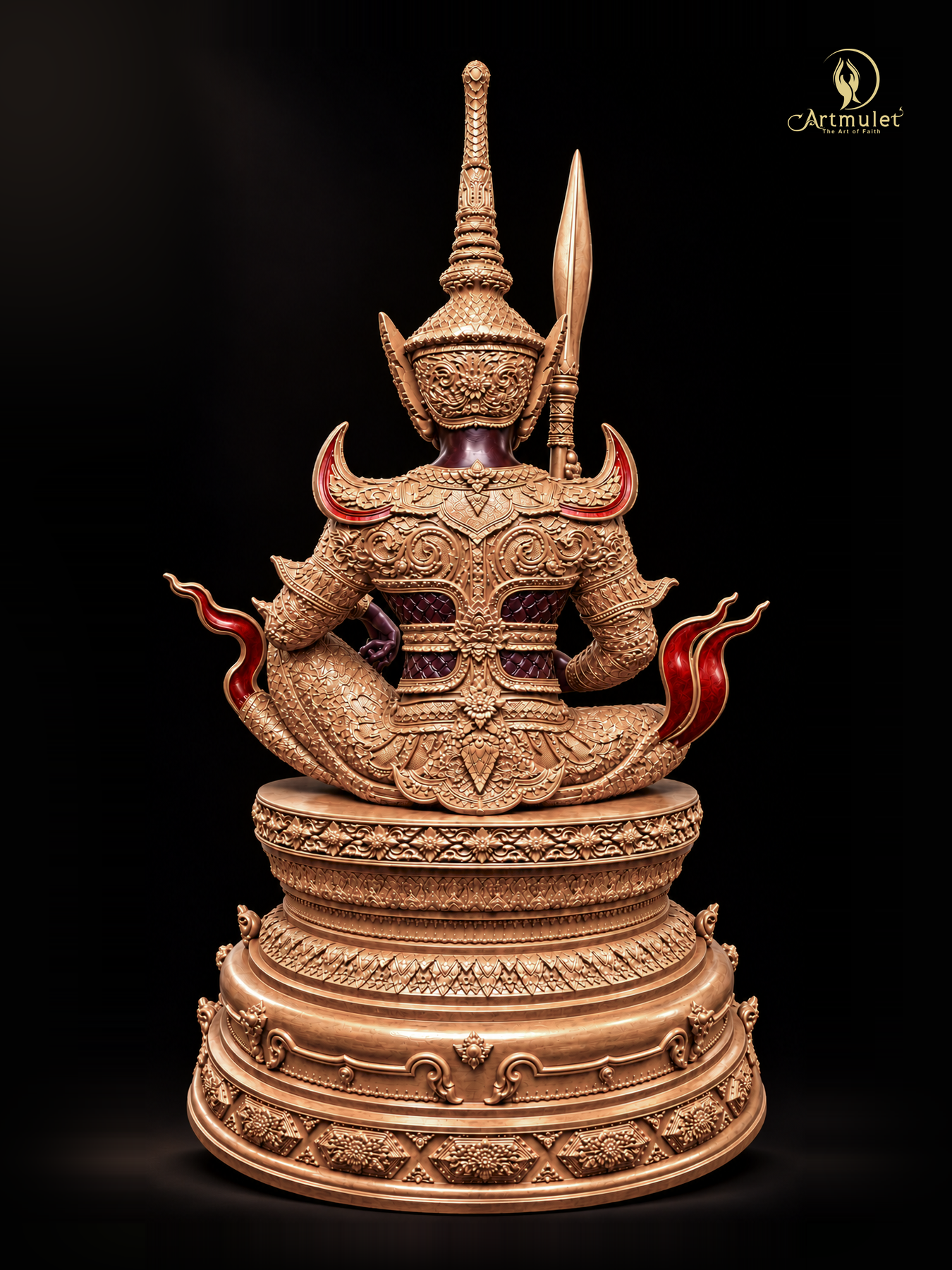
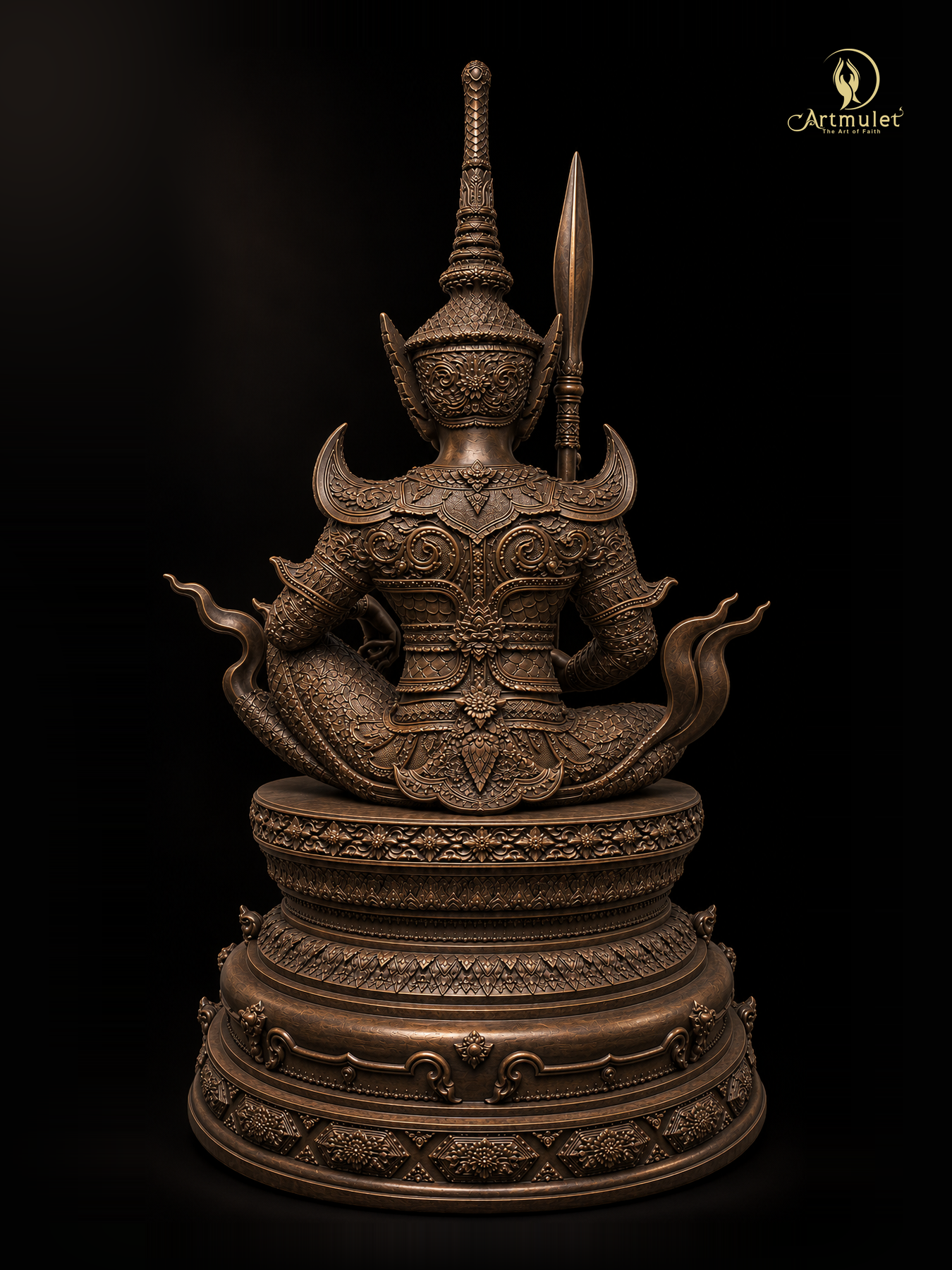
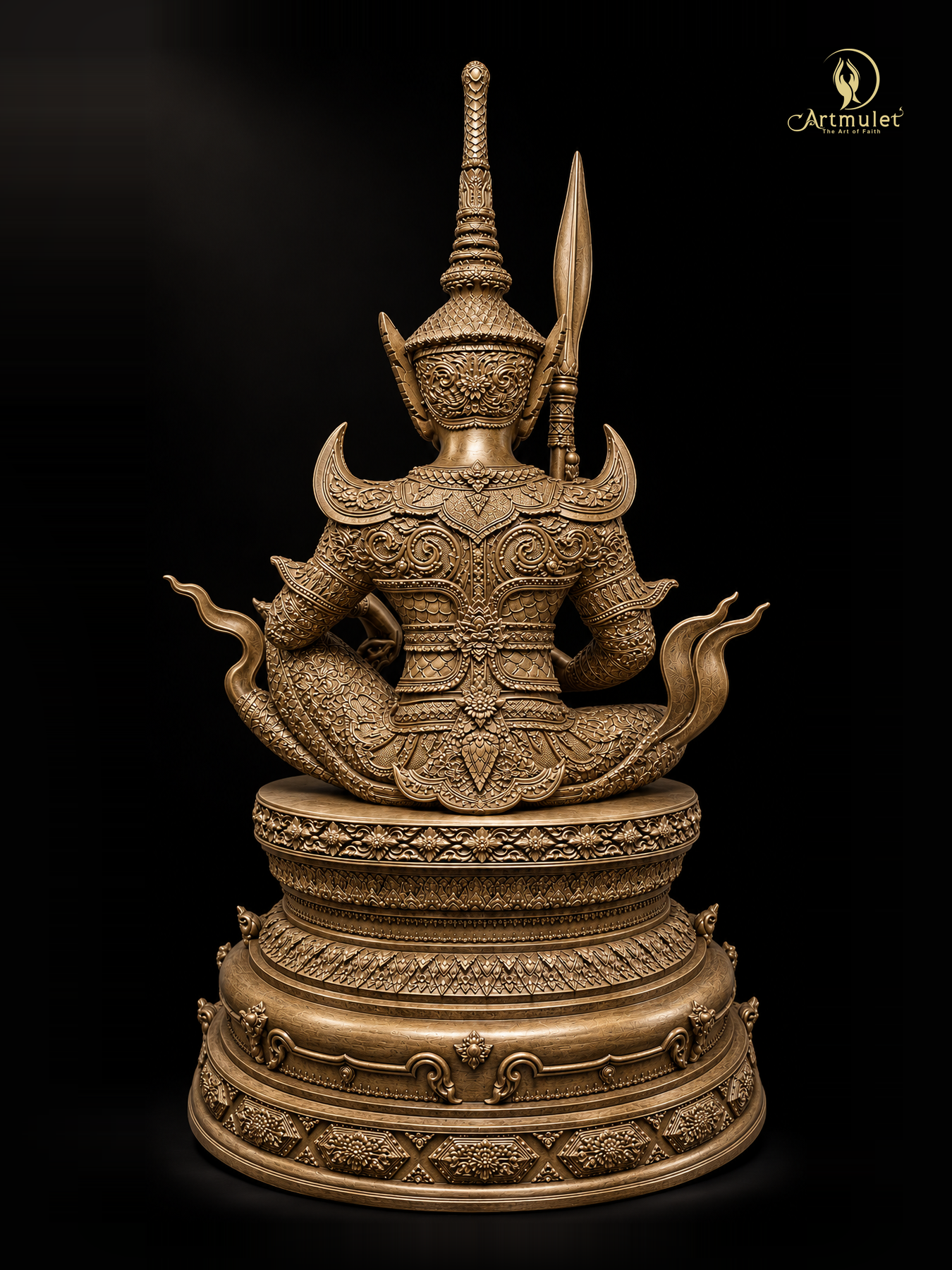
These accounts of Phra Phirap—the manifestation of Shiva who subdues malevolent forces, vanquishes demons, and dispels epidemics to restore peace to the people—inspired Artmulet to create Phra Phirap Yod Kaew Borom Khru: The Supreme Master in Regal Attire, the Mighty Vanquisher. The sculpture portrays him seated upon a royal throne, expressing his exalted status as the supreme master. His yot doen hon crown is adorned with a crescent moon, a symbol of Shiva. This crowned, enthroned interpretation offers a distinctive expression of a deity more commonly depicted dancing with an uncovered head.
His divine asura face conveys awe-inspiring spiritual power, while his elaborate attire draws upon the full ceremonial costume of khon. In his right hand, he holds his sacred spear, symbolising the subjugation of all evil. In his left, a star gooseberry branch represents the removal of inauspicious influences and the restoration of peace and well-being.
The work originated from the vision of Thanathat Thongniam, Artmulet's Executive Chairman, and Dr. Songphon Khemabunkul, the project adviser. Their concept was brought to life by painter Kriangkamol Nakbangkaew and sculptor Suchat Sae-Chio, whose artistry shaped the work with remarkable beauty. The sculpture was created to serve as a spiritual inspiration in daily life, a treasured personal and family heirloom, and a lasting contribution to Thailand's artistic heritage.